Humans (Homo sapiens) are highly intelligent primates that have become the dominant species on Earth. They are the only extant members of the subtribe Hominina and together with chimpanzees, gorillas, and orangutans, they are part of the family Hominidae (the great apes, or hominids). Humans are terrestrial animals, characterized by their erect posture and bipedal locomotion; high manual dexterity and heavy tool use compared to other animals; open-ended and complex language use compared to other animal communications; larger, more complex brains than other animals; and highly advanced and organized societies
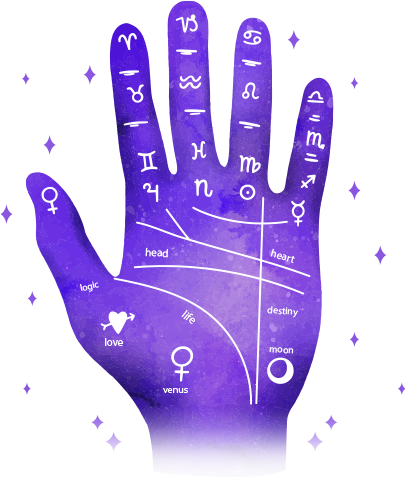
Are you worried about day-to-day life problems? Marriage issues? Job/Career issues? and more. Get accurate predictions and solutions for your problems from the TOp Astrologer in Bangalore, Pandit MB joshi who does Horoscope Reading, Palmistry & ace Reading, vastu Consultation, Kawade Shastra and provides the best astrological solutions
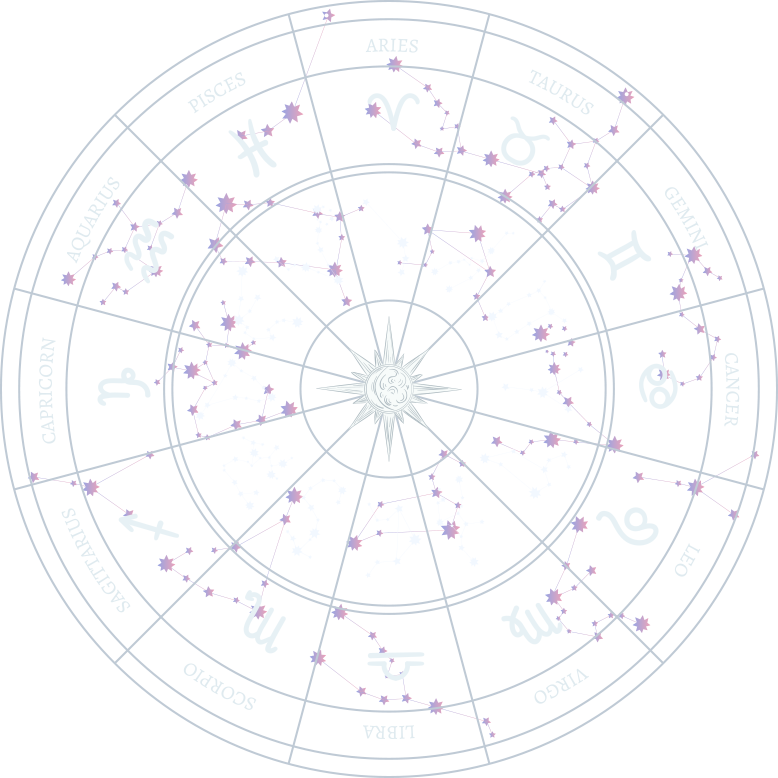
Kundli also known as horoscope, represents the position of the planets at the time of your birth. Kundli is used to interpret celestial influence in your life. Accurate birth date, tim and place are an important fctor in Vedic Astrology as it helps to generate accurate Kundli.
read more
Sun represent father, Moon mother, Mars and Mercury younger brother and sisters and Jupiter elder brother, There's great connections with Holy Stars to every aspect of our life and family. Pandit MB Joshi helps you understand those bonds and help you apply to solve your family problems.
read more
One of the most constant feelings that gives us butterflies in the tummies and leta time stop its course is whenever we are in love. It does not die nor does it change rather It keeps on growing making others feel its beauty and love life. Book Consultation to solve your love problems.
read more
You can heal your life and bring transformation in every aspect of your life and business. Pandit MB Joshi provides simple, powerful, logical solutions for all your vastu related problem with minimum or no alterations to your existing structure
read more
The genus Homo evolved and diverged from other hominins in Africa, after the human clade split from the chimpanzee lineage of the hominids (great apes) branch of the primates. Modern humans, defined as the species Homo sapiens or specifically to the single extant subspecies Homo sapiens sapiens, proceeded to colonize all the continents and larger islands, arriving in Eurasia 125,000–60,000 years ago, Australia around 40,000 years ago, the Americas around 15,000 years ago, and remote islands such as Hawaii, Easter Island, Madagascar, and New Zealand between the years 300 and 1280
read more
The closest living relatives of humans are chimpanzees and bonobos (genus Pan) and gorillas (genus Gorilla). With the sequencing of human and chimpanzee genomes, current estimates of similarity between human and chimpanzee DNA sequences range between 95% and 99%. By using the technique called a molecular clock which estimates the time required for the number of divergent mutations to accumulate between two lineages, the approximate date for the split between lineages can be calculated. The gibbons (family Hylobatidae) and orangutans (genus Pongo) were the first groups to split from the
read more
By the beginning of the Upper Paleolithic period (50,000 BP), and likely significantly earlier by 100–70,000 years ago or possibly by about 300,000 years ago behavioral modernity, including language, music and other cultural universals had developed. As early Homo sapiens dispersed, it encountered varieties of archaic humans both in Africa and in Eurasia, in Eurasia notably Homo neanderthalensis. Since 2010, evidence for gene flow between archaic and modern humans during the period of roughly 100,000 to 30,000 years ago has been discovered.
read moreThe History of India begins with the birth of the Indus Valley Civilization, more precisely known as Harappan Civilization. It flourished around 2,500 BC, in the western part of South Asia, what today is Pakistan and Western India. The Indus Valley was home to the largest of the four ancient urban civilizations of Egypt, Mesopotamia, India and China. Nothing was known about this civilization till 1920s when the Archaeological Department of India carried out excavations in the Indus valley wherein the ruins of the two old cities, viz. Mohenjodaro and Harappa were unearthed. The ruins of buildings and other things like household articles, weapons of war, gold and silver ornaments, seals, toys, pottery wares, etc., show that some four to five thousand years ago a highly developed Civilization flourished in this region.
The Indus valley civilization was basically an urban civilization and the people lived in well-planned and well-built towns, which were also the centers for trade. The ruins of Mohenjodaro and Harappa show that these were magnificent merchant cities-well planned, scientifically laid, and well looked after. They had wide roads and a well-developed drainage system. The houses were made of baked bricks and had two or more storeys.
The highly civilized Harappans knew the art of growing cereals, and wheat and barley constituted their staple food. They consumed vegetables and fruits and ate mutton, pork and eggs as well. Evidences also show that they wore cotton as well as woollen garments. By 1500 BC, the Harappan culture came to an end. Among various causes ascribed to the decay of Indus Valley Civilization are the recurrent floods and other natural causes like earthquake, etc.
read more
India's history and culture is dynamic, spanning back to the beginning of human civilization. It begins with a mysterious culture along the Indus River and in farming communities in the southern lands of India. The history of India is punctuated by constant integration of migrating people with the diverse cultures that surround India. Available evidence suggests that the use of iron, copper and other metals was widely prevalent in the Indian sub-continent at a fairly early period, which is indicative of the progress that this part of the world had made. By the end of the fourth millennium BC, India had emerged as a region of highly developed civilization.
You must have heard many times about the ancient Gurukul system of India. In this education system, you know the meaning of going to Guru’s house and getting an education. Here is the information of a Gurukul method for the purpose of explaining what is a Gurukul, how is there a routine, how is the teaching method used. Rama and Krishna grew up in this Gurukul education. Therefore, their utility to society was unique.
Schools where students get education away from their families by being part of the Guru’s family. Such schools were of great importance in the ancient history of India. The students studied in the Gurukul of famous Acharyas were highly respected everywhere. Rama was educated by staying at sage Vashistha. Similarly, the Pandavas received education by staying at the sage Drona.
The Ministry of Culture plays a vital role in the preservation and promotion of art and culture. Its aim is to develop ways and means by which basic cultural and aesthetic values and perceptions remain active and dynamic among the people. It also undertakes programmes for the promotion of various manifestations of contemporary art. The Department is a nodal agency for commemorating significant events and celebrating centenaries of great artists.
read moreIndia is a very religious country and is known to have one of the oldest civilizations in the world. It has a diverse culture, tradition, and heritage. In India, there are various important temples that exist in the country for 1000 years. For the worshippers, these temples are of great significance. Their grandeur and elaborate architecture make them quite fascinating too. Here, we mention some of the famous Indian temples where you must pay a visit.
read moreUpanayana or yagno pavit (sacred thread ceremony): This is essentially an initiation ritual that marks the transition of a child from the infantile stage of play to the serious stage of study and sadhana. The child is initiated into the study of the sacred Vedas. The upanayana sanskara typically takes place around the eighth year of a child’s life; however, some receive it as early as five and some as late as twelve.
read more
The Mantra For Success, Victory, Prosperity, Knowledge And Illumination
That personification, personality, function of the supreme divine Consciousness, which breaks up all obstructions to our inner spiritual purity, progress and perfection, is Ganesha. It is that cosmic and supracosmic power of God, which demolishes all barriers to success and prosperity in the external and internal life of the human individual. It destroys all obstacles to human peace, happiness, growth, development, power, evolution.
India is a land of festivals, where people from different religions coexist harmoniously. The wide variety of festivals celebrated in India is a true manifestation of its rich culture and traditions. While the celebrations happen all over the year, October till January is the time when the country can be seen at its vibrant best. And all festivals are celebrated according to their culture, ritual and belief. So if someone asks about festivals, it will be a quite difficult to answer it. According to different religions, festivals have been organised in different categories.
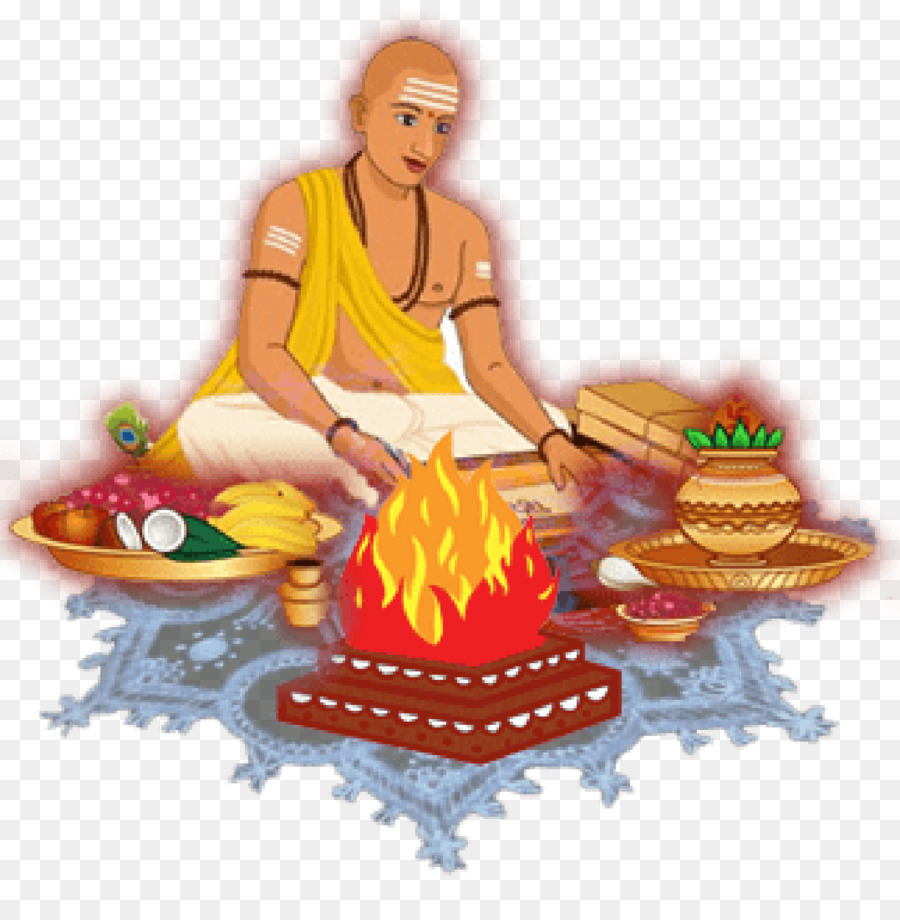
Puja or pooja is a worship ritual performed by Hindus(those people who lived on the other side of river Indus (Sindhu: in Sanskrit))., Buddhist ( is an Indian religion based on a series of original technique attributed to Gautam buddha. ) and Jains to offer devotional homage and prayer to one or more deities, to host and honour a guest, or to spiritually celebrate an event. It may honour or celebrate the presence of special guest(s), or their memories after they die. The word “puja” is sanskrit, and means reverence, honour, homage, adoration and worship. Puja, the loving offering of light, flowers, and water or food to the divine, is the essential ritual of Hinduism. For the worshipper, the divine is visible in the image, and the divinity sees the worshipper. The interaction between human and deity, between human and guru, is called darshan, seeing.
Our religion and culture is a complex system of beliefs that bind together our faith and our values. It is unique in every way and is a source of peace for a lot of us. Puja or Pooja is an integral part of this faith, something that’s been done since ever. In many ways, it is symbolic of our values and what they mean in our lives. On special occasions like Diwali, Baisakhi, Rakhi, birthdays, etc. you perform special Pujas using Pooja Thali , that makes the occasion not only memorable but also auspicious. But at a young age, it can be difficult to understand why we do Puja during all these times, especially if it’s significance has never been explained. On knowing the reasons behind the foundations of your faith, the bond becomes all the more stronger.
Essentially, Puja is a ceremony or ritual during which we make offerings to a deity in order to receive blessings or good fortune as prasad. During a Puja, we often repeat sacred stotras or verses or mantras that help us to connect to God and make our mind peaceful. The entire act of Puja is a symbolic means of showing devotion to a deity and surrendering oneself at the altar, as a mark of true worship.
The reason is in the word itself – “Pu” means ‘to purify’ or ‘to cleanse’ and “ja” means ‘birth’. So, as you perform Puja, you cleanse your body, mind, and intellect and essentially take a new birth each time. So, if you feel that you need to reset your inner self and start anew, a Puja is what will help you get there.
We provide Buddhism and meditation resources. We try to make our classes relaxed, informal and interactive, and relevant to ordinary people leading ordinary lives. You do not have to be a Buddhist or become a Buddhist or anything else in order to attend our classes.
India is a land of festivals, where people from different religions coexist harmoniously. The wide variety of festivals celebrated in India is a true manifestation of its rich culture and traditions. While the celebrations happen all over the year, October till January is the time when the country can be seen at its vibrant best.
Lorem Ipsum is simply dummy text of the printing and typesetting industry. Lorem Ipsum has been the industry's standard dummy text ever since the 1500s, when an unknown printer took a galley of type and scrambled it to make a type specimen book. It has survived not only five centuries, but also the leap into electronic typesetting, remaining essentially unchanged. It was popularised in the 1960s with the release of Letraset sheets containing Lorem Ipsum passages, and more recently with desktop publishing software like Aldus PageMaker including versions of Lorem Ipsum.
Yoga has become a global phenomenon over the last several decades. What started out thousands of years ago in India as a meditative practice.
Yoga is a Sanskrit word translated asunion.It means to draw together, to bind together; or to unite. Its aim is to yoke or create a union of the body, mind, soul, and universal consciousness. This process of uniting the physical, mental, emotional, and spiritual aspects of ourselves is what allows yogis to experience deep states of freedom, peace and self-realization.
read moreAstrology is the study of the connection between celestial activity phenomena and earthly events like career, relationship etc. Those who practice astrology are called astrologers. This is completelybased on where the planets were when you were born including time and date. Birth Charts are also used to investigate the characteristics and outcomes of various events in ones life.
To truly understand astrology, you have to know that it’s a science, a scholarly study, an art form, a language, and a divination tool all at once. Its earliest roots are found in Babylon, somewhere around 2400 BC. After this, different schools of thought of astrology formed as it made its way to Greece in 331 BC and the Middle East in the 5th century AD.
read moreAstronomy is the study of everything in the universe beyond Earth’s atmosphere including objects we can see with our naked eyes, like the Sun , the Moon, the planets, and the stars . It also includes objects we can only see with telescopes or other instruments, like faraway galaxies and tiny particles. And questions about things we can't see like dark energy.
Astronomy is one of the oldest scientific disciplines that has evolved from thebeginning of counting stars and charting constellations with the naked eye to the impressive showcase of humankind's technological capabilities. Despite all progress, astronomers are still working hard to understand the nature of the Universe and humankind's place in it.
read moreThe system of Puja and prayers is associated with all the religions. Hinduism is the oldest religion of the world which developed about 10,000 years ago when man lived in a jungle without shelter fearing natural calamities like thunderstorm, fire etc. They then must have realized the importance of a super power protecting them from such events. With this developed an elaborate system of worship of Fire God (agni), Sun God (suryadev) etc. Today, there are 1000’s pf Puja Systems associated with deities for fulfillment of human desires, freedom, wants, sufferings, marriage, health etc.
A person can get rid with the obstacles in life and create a happy space for himself with the help of Puja/Hindu rituals. Removal of obstacles Yagya takes care of all the problems and smoothens the journey of life. Lord Ganpati is the God of success in all ventures and undertakings. Maa Laxmi is the Goddess of prosperity and wealth. Lord Kuber is the deity of wealth. This Yagya/Puja helps in bringing prosperity, removing obstacles, increasing good luck and attracting auspiciousness.
Today most people have little power of attention or capacity for concentration. We live in a high-tech age of computers, social media, and virtual reality. Our minds are trained since childhood to be entertained.There are numerous tools of concentration taught to us of which is sound and mantra.